
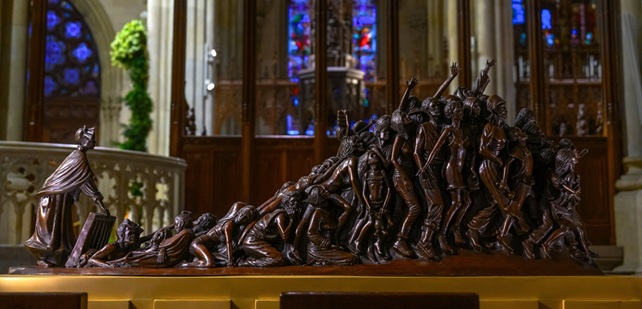
"Religious Congregations have a vital role to play in the ongoing fight against human trafficking", affirms Sr Caroline Njah, superior general of the Holy Union. "Rooted in the Gospel and close to the realities of vulnerable people, we are called to be a prophetic presence—raising awareness, advocating for justice, accompanying survivors, and working collaboratively with Church and civil partners. Our witness is not only in what we do, but in who we are: communities that believe in the dignity of every person and refuse to accept exploitation as inevitable".
The commitment of the Holy Union sisters goes back many years: it flows directly from the charism of union lived through reconciliation, which defines who the sisters are called to be: "at the heart of the world revealing God's love" (Constitutions, Art. 1).
"We seek to create spaces where dignity is restored, voices are heard, and hope can take root again – Sr Caroline continues - Through education, prevention, pastoral accompaniment, and prayer, we strive to stand with those whose freedom has been taken from them and to address the structures that allow such injustices to persist. We dare to go where others have not yet gone and to do what others have not yet done (Constitutions, Art. 65)".
To celebrate St Giuseppina Bakhita – patron of the anti-trafficking ministry – whose feast day falls on Feb. 8, World Day of Prayer and Reflection against Trafficking in Persons - and to inspire other women worldwide, we collected some stories from Holy Union sisters who are in the frontline against this persistent form of slavery and to accompany the victims of the trafficking: Sr Mary Lou Simcoe from the US, Sr Eugenia Msana from Tanzania, Sr Denise O'Brien from Ireland.
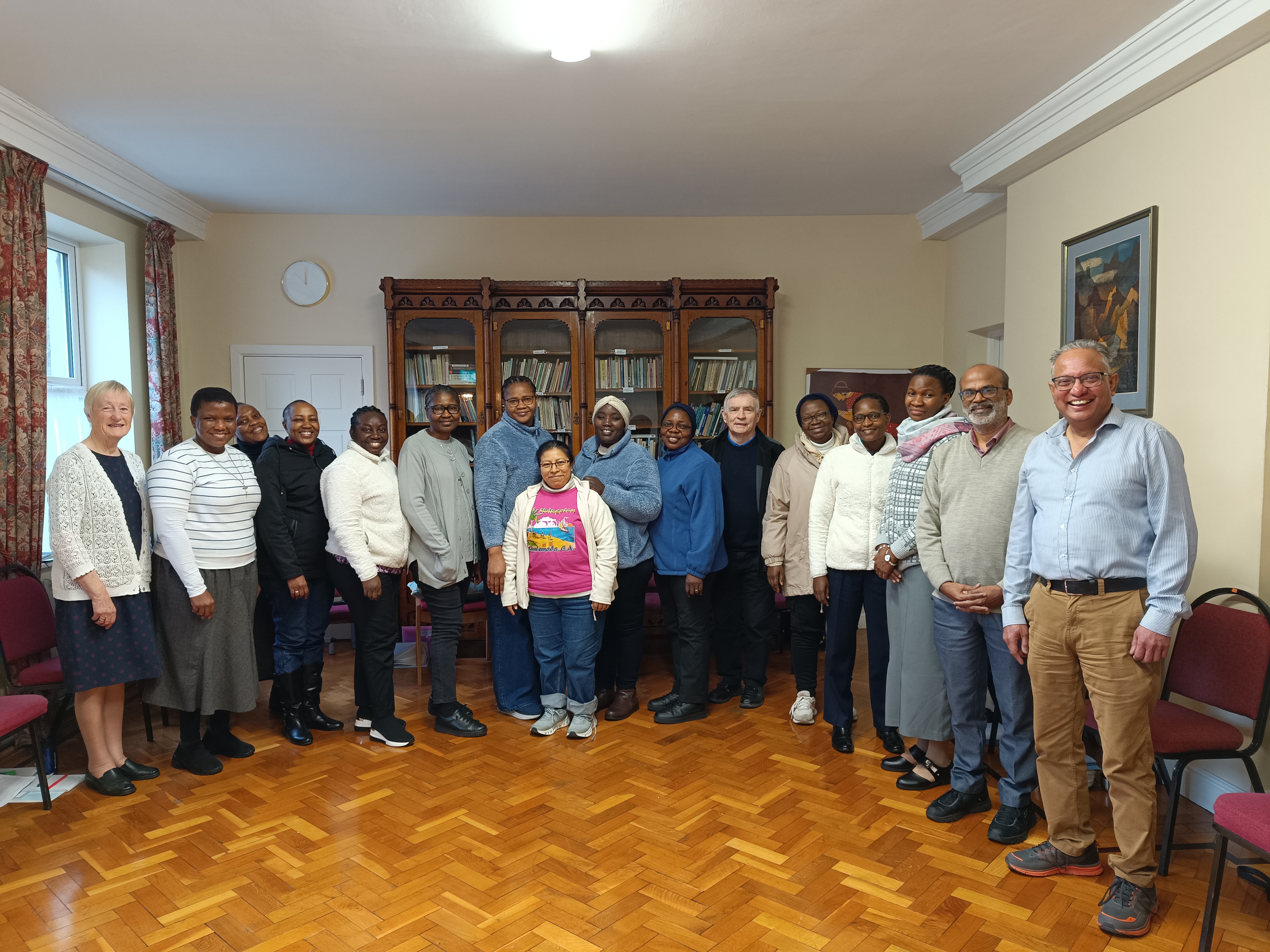
"Today about 56 million women, men and children are being exploited, controlled and denied their dignity and their humanity, across the world but also in Ireland", affirms Sr. Denise O'Brien, chairperson of APT Act to Prevent Trafficking (read also on Sisters Global Report: Sister organization in Ireland fights human trafficking for 20 years), a committee of representatives from various religious congregations and missionary societies founded more than 20 years ago and collaborating with many entities of the civil society. "Pornography so available and so destructive of human love is mostly available through the (ab)use of women", continues Sr Denise. "Trafficking of women and drugs are often compared and it is difficult to decide which is the more lucrative. For me, while I see and recognise the awful consequences of drugs, they can be sold but used only once. Sadly women and their bodies can be subjected to abuse many times, sold again and again, abused again and again".
"Our Constitutions call us to be mindful of the poor, as our Founder, Fr. Debrabant, was. We are sent to announce a message of hope for all people and to challenge those values of society which are not in harmony with the spirit of the Beatitudes. As ecclesial women, we are called to proclaim the good news of God's abiding presence, the dignity and rights of all. We are encouraged to strive together to transform the world. Through direct service to the oppressed and lonely we manifest the presence and compassion of Christ to His poor. This is the Spirit I was called to so many years ago, a spirit I saw and later experienced in extraordinary ways, in the practices of those who preceded me".
Sister Eugenia Mshana - who is a member of the Leadership Team in Tanzania – recently attended a regional meeting in Lusaka Zambia on Human Trafficking. Sr Eugenia represents the Tanzania Catholic Association of Sisters (TCAS) on the issue of Human Trafficking through the Talitha Kum network. "Our main focus is on training communities through parishes, mosques, schools, and higher education institutions such as universities. We prioritize training in border regions because they have been identified as particularly vulnerable", shares Sr Eugenia. Since 2021, the religious women under the TCAS anti-human trafficking programme have sensitized and impacted over 32,000 individuals across Tanzania's six regional zones. "A key challenge – continues Sr Eugenia - is the need to establish more safe houses for victims of trafficking, emphasizing the importance of providing secure accommodation and support systems after rescue". Sister Eugenia has expressed that the mission of Catholic sisters through Talitha Kum has laid a "strong foundation" in the fight against trafficking. Her commitment is rooted in the belief that with enhanced coordination and sustained collaboration, they can restore hope and dignity to those most at risk. She envisions a future where "every effort we make creates ripples of change," viewing the religious community as a "beacon of hope" that must actively build a world where safety and justice prevail for the vulnerable.
TCAS has successfully supported the repatriation of victims from countries in Asia and other African nations, helping them return safely to their home communities. In a specific local case, sisters rescued a woman and her five children. Her husband had joined a cult and planned to traffic the children for ritual sacrifice. The sisters provided the family with safety in a center and later secured a teaching job for the woman to ensure her long-term independence.
"What is something practical we can do to support trafficking victims?" Sister Mary Lou Simcoe asked herself along with other members of the Boston Coalition engaged in the fight against human trafficking. But her personal commitment in this field dates back many years. She was part of UNANIMA, an NGO active in anti-trafficking work, and after her term she continued attending conferences and workshops at the U.N. related to human trafficking, and developed educational materials.
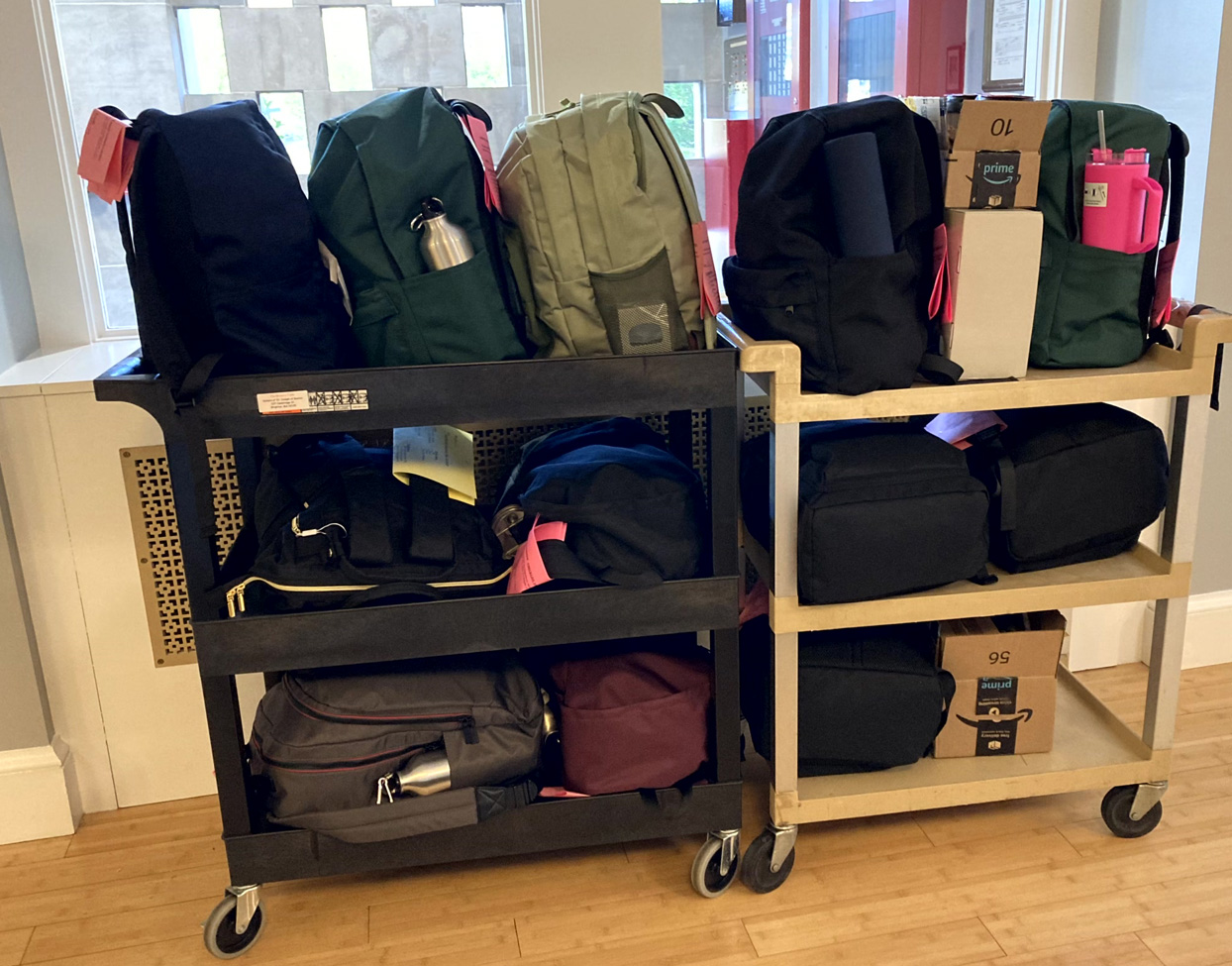
"We learned that when a victim is rescued and brought to a safe location, that individual comes with nothing. So, we drew up a list of things that would help a person in their first days of freedom. We gathered these items into backpacks and we called them "Bags of Love". Included in each bag are personal notes written by retired sisters from one of our member congregations, letting the person know that they are being supported by the prayers of the sisters. A person who works with survivors told us that when she gave her client the Bag of Love, the young woman told her, 'This is the first time that someone has given me something without expecting anything in return'.
"Each January, which is Human Trafficking Awareness Month in the United States, the Boston Coalition holds a prayer vigil which begins in the chapel of the Sisters of St. Joseph of Boston and then participants stand in silence on the busy street in front of the convent holding signs related to human trafficking. "At the beginning, participants were sisters from our member congregations – share Sr Mary Lou - but through the years we have been joined by members of law enforcement and people who work to support survivors. As traffic passes, they wave and honk their horns to show support". U.S. Holy Union Sisters display decals with the text and telephone number of the Polaris Project Hotline on their cars. Polaris Project is an organization that works to combat and prevent sex and labor trafficking in North America. Holy Union joins many other Catholic Sisters in the U.S. to raise awareness and educate about what has been called "modern day slavery". A commitment that goes from the frontline accompanying of survivors to the awareness campaigns, enlightened by the purpose to "continue to strengthen networks of solidarity and prophetic action so that healing, freedom, and hope may grow", as Sr Caroline Njah puts it. And she concludes, addressing to all the sisters: "May the life of St. Josephine Bakhita continue to inspire us to remain steadfast in this mission, trusting that even small, faithful actions can contribute to a more just and compassionate world".
By Maria Chiara De Lorenzo